
Carbon reports
ITAD carbon claims are often vibes. Duxer Cloud's are not. This page explains what's behind the ESG numbers — and what we deliberately don't claim.
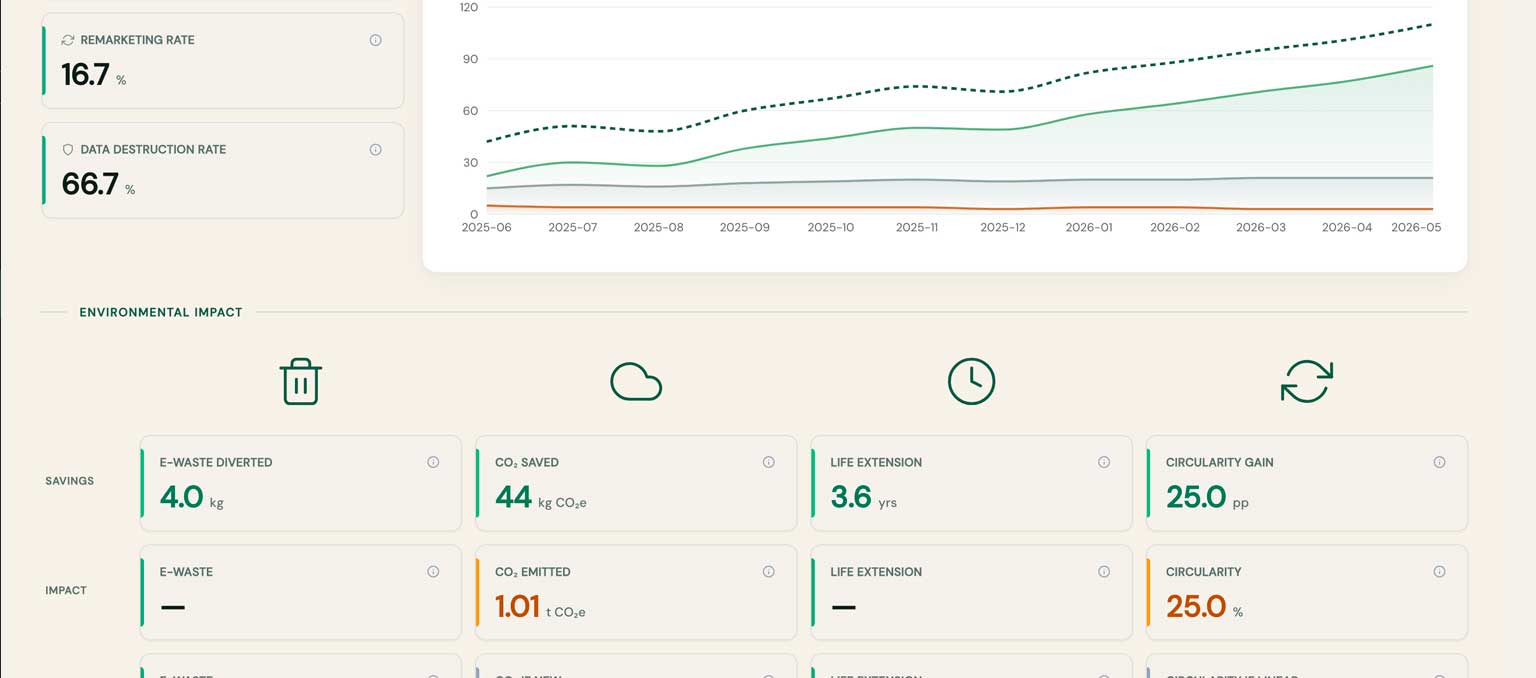
The model
The carbon engine is a component-level Life Cycle Assessment (LCA) model. Each host device has a base embodied carbon figure derived from published cradle-to-gate datasets:
| Device type | Base embodied CO₂e (kg) |
|---|---|
| Laptop | 300 |
| Desktop | 500 |
| Server | 800 |
| Monitor | 200 |
| Printer | 80 |
| Mobile | 85 |
| Other | 150 |
Inside each host, we further decompose to component fractions — battery, RAM, SSD, CPU, GPU, screen, board. Each component is a fraction of the host's total embodied carbon, sourced from the same datasets and peer-reviewed where possible.
Lifespans assumed:
| Device type | Useful life (years) |
|---|---|
| Laptop | 5 |
| Desktop | 7 |
| Server | 8 |
| Monitor | 10 |
These are conservative consensus figures, not the optimistic numbers sometimes used in marketing reports.
What the engine computes per project
Given a project's assets and their dispositions, the engine produces:
- Embodied carbon avoided through reuse — the host carbon of each remarketed device, prorated by remaining useful life.
- Embodied carbon recovered through component reuse — fractional credit when individual components (RAM, SSD, etc.) are reused even when the host is broken up.
- Carbon footprint of the recycling pathway — small but non-zero; shipping, processing, smelting estimates.
- Net carbon impact per project — the headline number suitable for client reports.
All four are surfaced on every project ESG report.
AI executive summary
The platform can generate an executive summary paragraph from the project numbers, written in board-meeting English rather than ITAD-engineer English. The summary:
- Uses only the numbers actually computed — no extrapolation.
- Cites the model assumptions inline (lifespans, base CO₂e).
- Adds a sensitivity caveat where numbers are uncertain.
You can edit the generated summary before exporting. The original auto-generated version is retained on the project for audit.
Branded PDF export
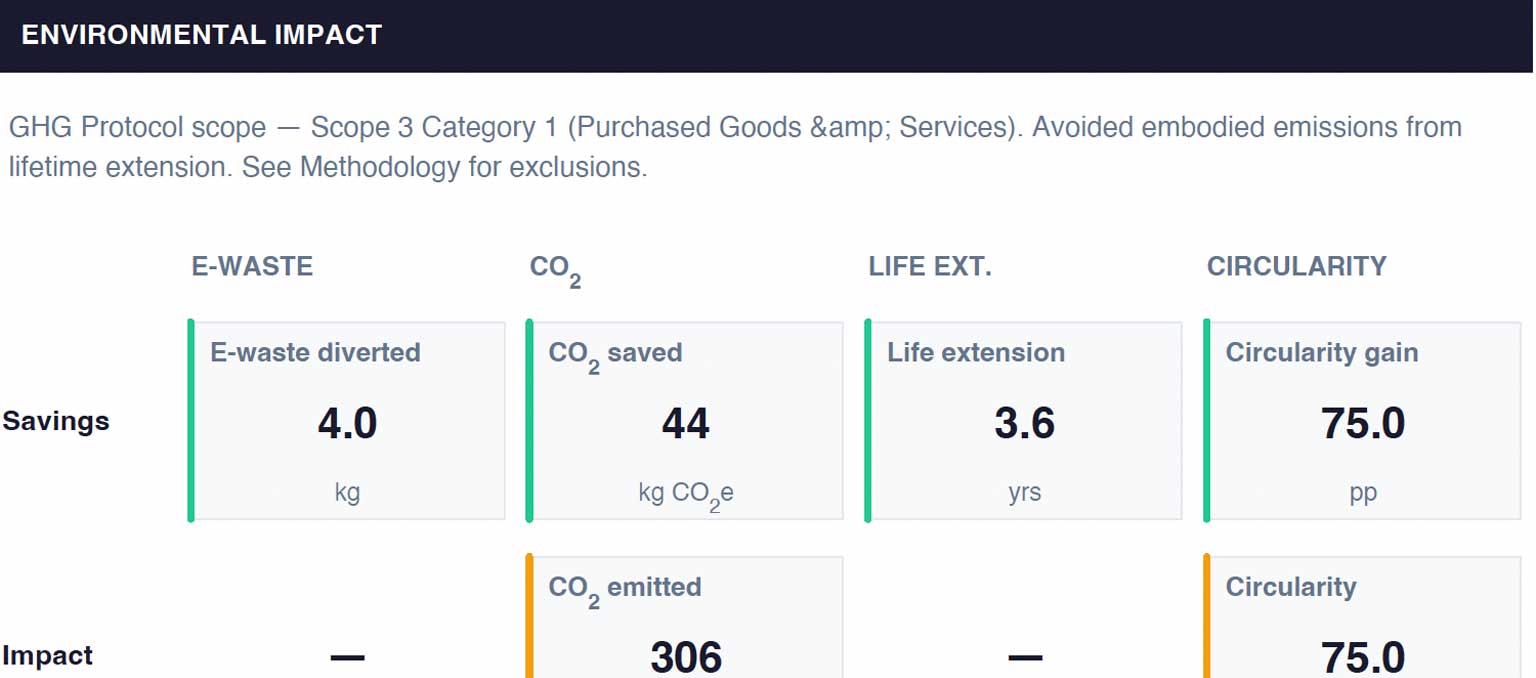
The report exports as a PDF carrying your tenant's branding — logo, brand colour, footer. The PDF includes:
- Project summary block (client, dates, asset count).
- Headline carbon numbers (avoided, recovered, net).
- Per-disposition breakdown.
- Methodology section with the model constants and source references.
- AI-generated executive summary.
What we don't claim
The model is an honest cradle-to-gate embodied carbon estimate. It is not:
- An LCA certified to ISO 14040/14044 — that requires third-party verification per project; available as a service on Enterprise.
- A Scope 3 reduction claim — that depends on your client's accounting framework and is theirs to make, not yours.
- A net-zero claim — the report shows net carbon impact, not net-zero certification.
We're conservative on purpose. The number we publish is the number we'd defend in front of an auditor. If you need stronger claims, the Enterprise tier includes routes to third-party verification.
What to read next
- iOS field app — capturing the assets the carbon engine costs.
- Project intake — the project record the ESG report attaches to.